Spain’s greatest travel experiences are often found far beyond the country’s headline destinations. Away from Barcelona’s Modernisme and Seville’s grand plazas lies another Spain: medieval hill towns where centuries-old trades survive, Renaissance squares remain remarkably intact and local festivals still shape the rhythm of everyday life. These smaller settlements reward travellers willing to leave the motorway, offering extraordinary architecture, regional gastronomy and a slower pace of discovery. Better still, each is within a comfortable drive of an international airport and offers boutique hotels, excellent restaurants and enough cultural depth to justify several days rather than a hurried stopover.
Alquézar, Aragón
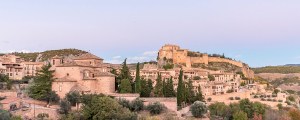
Perched dramatically above the turquoise Vero Canyon in Aragón’s Sierra de Guara Natural Park, Alquézar is one of Spain’s finest medieval villages, yet remains refreshingly overlooked by international visitors. Its honey-coloured stone houses climb steeply towards the imposing Collegiate Church of Santa María la Mayor, a fortress-monastery first established after the Christian reconquest in the 11th century. Narrow cobbled lanes reveal Gothic arcades, tiny squares and spectacular viewpoints across limestone cliffs where griffon vultures soar overhead. The surrounding landscape has also become one of Europe’s leading destinations for canyoning and hiking, with elevated walkways suspended above the river offering remarkable perspectives of the gorge. Stay at the elegant Hotel Villa de Alquézar or Hotel Castillo, both within walking distance of the historic centre. The village is around a two-hour drive from Zaragoza Airport and approximately 2.5 hours from Barcelona, making it an ideal extension to a city break.
Pedraza, Castile and León
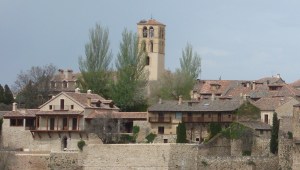
Few places evoke medieval Castile quite like Pedraza. Entered through a single fortified gate that has controlled access since the Middle Ages, the village appears almost untouched by time. Noble mansions line impeccably preserved streets leading to the Plaza Mayor, where arcaded buildings surround one of Spain’s most atmospheric market squares. Looming above is Pedraza Castle, later owned by the painter Ignacio Zuloaga, whose collection remains on display inside. During July, the celebrated Noche de las Velas transforms the village as thousands of candles illuminate every street, creating an unforgettable spectacle without electric lighting. Boutique accommodation includes Hospedería de Santo Domingo and the charming Hotel El Bulín de Pedraza. Madrid-Barajas Airport is roughly 90 minutes away by car, making Pedraza one of the easiest historic escapes from the Spanish capital.
Frigiliana, Andalusia
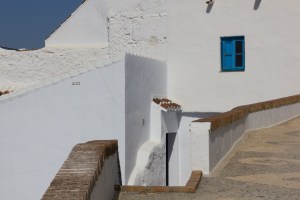
Just inland from the Costa del Sol, Frigiliana rises in dazzling white terraces against the foothills of the Sierra Almijara. While nearby Nerja attracts the majority of visitors, Frigiliana retains the character of an authentic Andalusian pueblo blanco. Its old Moorish quarter, the Barribarto, is among the best preserved in Spain, with impossibly narrow streets, stepped alleyways and intricately patterned pebble mosaics telling the story of the village’s Islamic past. The Palace of the Counts of Frigiliana—today home to Europe’s only working sugar-cane honey factory—offers another reminder of the region’s agricultural heritage. Boutique stays such as Hotel Villa Frigiliana and Millers of Frigiliana provide easy access to the historic centre. Málaga-Costa del Sol Airport lies around an hour away, allowing travellers to combine the village with the beaches of the Costa del Sol while experiencing a far richer sense of Andalucía’s history.
Santillana del Mar, Cantabria

Despite its name, Santillana del Mar sits nowhere near the sea, yet it remains one of northern Spain’s architectural masterpieces. Frequently described as a living medieval museum, its entire historic centre consists of impeccably preserved sandstone mansions, Romanesque churches and flower-filled courtyards. The jewel is the Collegiate Church of Santa Juliana, whose exquisite cloisters rank among Spain’s finest Romanesque monuments. Just outside the town lies the world-famous Altamira Cave and its museum, where extraordinary Palaeolithic cave paintings—often called the ‘Sistine Chapel of prehistoric art’—are interpreted through an exact replica to protect the fragile originals. Parador de Santillana Gil Blas and Hotel Casa del Marqués provide refined accommodation within historic buildings. Santander Airport is only around 30 minutes away, making the village an effortless cultural detour through Green Spain.
Morella, Valencian Community
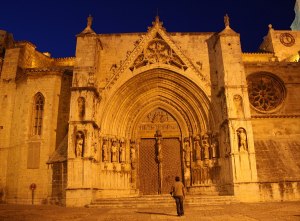
Encircled by more than two kilometres of medieval walls and crowned by a spectacular hilltop castle, Morella dominates the rugged landscape of northern Valencia like a fortress from an epic novel. Civilisations from the Iberians and Romans to the Moors and Aragonese all recognised its strategic importance, leaving behind layers of history that unfold through Gothic churches, Renaissance palaces and winding streets climbing towards the citadel. The Basilica of Santa María la Mayor is especially renowned for its intricate choir staircase and richly decorated interior, while local restaurants celebrate the mountainous Maestrazgo region with black truffles, artisan cheeses and traditional pastries. Visitors can stay at Hotel Cardenal Ram or Parador de Morella, both housed within historic buildings. Castellón Airport is approximately 90 minutes away, while Valencia Airport can be reached in just over two hours, placing one of Spain’s most dramatic walled towns comfortably within reach of an international arrival.