Falafel stands. Neon-lit cabarets. Arondissements spiralling out from the Seine. Here’s your guide to understand Parisian neighbourhoods like a local.
Le Marais: Chic, Eclectic, and Effortlessly Cool
Le Marais is Paris at its most stylishly nonchalant-a labyrinth of cobblestone lanes, hidden courtyards, and centuries-old mansions now home to cutting-edge galleries and boutiques. Once the stronghold of aristocrats and later the heart of the city’s Jewish community, today the Marais is a magnet for artists, LGBTQ+ Parisians, and fashion-world insiders. The vibe is both historic and forward-looking: falafel shops and vintage stores rub shoulders with luxury flagships and concept stores. On weekends, the streets are a parade of creative types and shoppers, all drawn by the Marais’ irresistible blend of old-world charm and new-world energy.
Saint-Germain-des-Prés: Intellectual Glamour
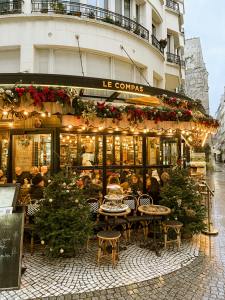
Saint-Germain-des-Prés is the Paris of existentialists and jazz, where the ghosts of Sartre and Simone de Beauvoir still haunt the legendary cafés. Once the haunt of philosophers, writers, and artists, today it’s a playground for well-heeled Parisians, literary tourists, and the occasional celebrity. The vibe is refined but never stuffy-think art galleries, antique bookshops, and patisseries that have perfected the art of the madeleine. The neighborhood’s elegant boulevards and tucked-away squares are lined with designer boutiques and storied brasseries, making it the quintessential address for those who like their culture with a side of couture.
Montmartre: Bohemian Reverie on a Hill
Montmartre is a village perched above the city, its winding streets and secret gardens still echoing with the laughter of Picasso, Toulouse-Lautrec, and the ghosts of cabaret. Historically a haven for artists and outsiders, Montmartre today draws a mix of tourists, young creatives, and old-timers who remember when the rent was cheap and the absinthe flowed. The vibe is romantic and a touch unruly-painters still set up their easels in Place du Tertre, while quirky boutiques and wine bars keep the artistic spirit alive. Down the hill, the neon of Pigalle signals a different kind of nocturnal adventure.
Latin Quarter: Student Spirit and Timeless Energy
The Latin Quarter is Paris at its most youthful and chaotic, anchored by the venerable Sorbonne and a warren of medieval streets. For centuries, this has been the stomping ground of students, intellectuals, and revolutionaries-its cafés and bookshops echoing with debate and poetry. Today, the Latin Quarter is still a magnet for scholars, backpackers, and night owls, with secondhand bookstores, indie cinemas, and jazz clubs on every corner. The vibe is egalitarian and electric-cheap eats, lively bars, and a sense that anything could happen, especially after midnight.
Canal Saint-Martin: Hipster Hideaway
Once a working-class enclave crisscrossed by iron footbridges, Canal Saint-Martin has become Paris’s hipster HQ. The neighborhood’s industrial past lingers in its converted warehouses and graffiti-tagged walls, but today it’s all about artisanal bakeries, third-wave coffee, and indie boutiques. Young professionals, artists, and startup founders flock here for the laid-back vibe and the promise of a picnic by the water. On sunny days, the canal’s banks are crowded with friends sharing bottles of wine, while at night, the bars and bistros fill with a crowd that’s equal parts effortlessly cool and endlessly creative.
Belleville: Gritty, Global, and Artistic
Belleville is where Paris gets real-a patchwork of immigrant communities, artists’ squats, and street art that climbs the hills toward panoramic city views. Historically a working-class neighborhood, Belleville has long been a landing pad for new arrivals, from Eastern European Jews to North African families to Chinese restaurateurs. Today, it’s a magnet for young artists and musicians priced out of the center, as well as locals who cherish its authenticity. The vibe is vibrant and a little rough around the edges-think bustling markets, hole-in-the-wall bistros, and a creative energy that refuses to be tamed.
Pigalle: Nightlife and Neon Nostalgia
Pigalle is Paris’s pleasure district, where the Moulin Rouge’s red windmill still spins above a neighborhood that’s equal parts risqué and retro. Once infamous for its brothels and music halls, Pigalle has reinvented itself as a hub for nightlife, vintage shopping, and live music. The vibe is playful and a little decadent-cocktail bars, sex shops, and indie music venues attract a mix of partygoers, musicians, and fashionistas. By day, the area’s vintage boutiques and quirky cafés draw a creative crowd, but after dark, Pigalle’s neon-lit streets come alive with the city’s wild side.
Bastille: Revolutionary Roots, Modern Buzz
Bastille is where Paris’s revolutionary spirit lives on, its streets pulsing with the energy of young Parisians and the ghosts of 1789. Once a working-class stronghold, Bastille is now a hotspot for nightlife, live music, and some of the city’s best bistros. The neighborhood’s historic squares and leafy boulevards are lined with bars, clubs, and creative spaces, attracting everyone from students to startup founders. The vibe is dynamic and democratic-no dress code, no attitude, just a constant hum of activity that keeps Bastille at the heart of the city’s cultural conversation.