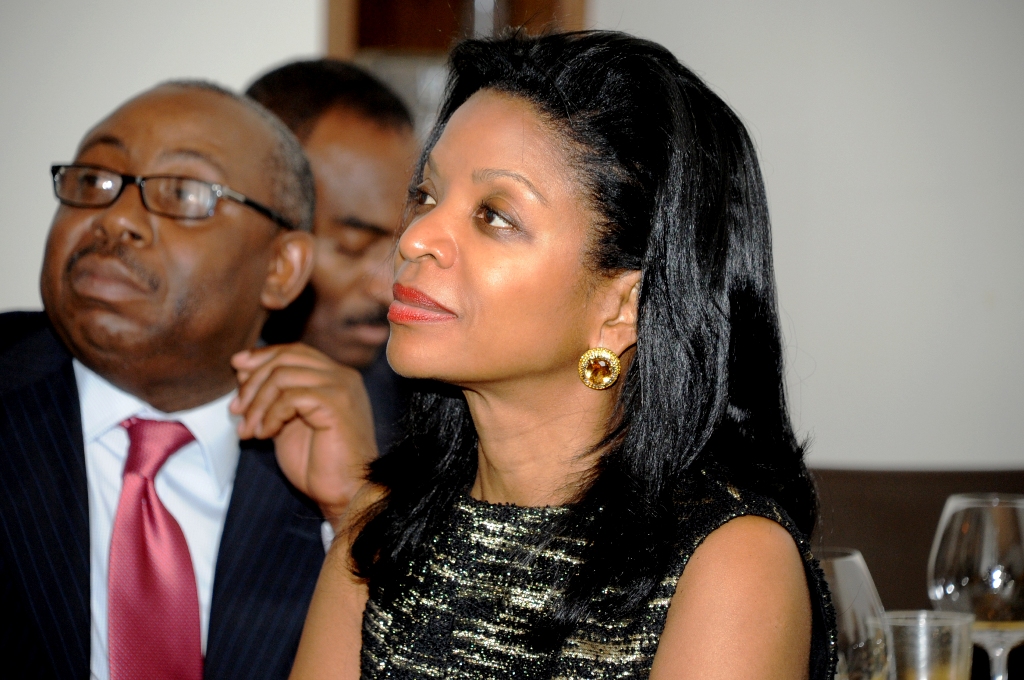
Pamela J. Joyner does not need to raise her voice. From her vantage point in San Francisco, with a Rolodex that includes directors of the world’s most powerful museums and the artists rewriting contemporary art history, she has been shaping the canon quietly, but deliberately, for over two decades.
Joyner is best known for her formidable collection of works by African American abstract artists, spanning mid-century figures like Norman Lewis and Alma Thomas to living practitioners such as Mark Bradford and Julie Mehretu. But to describe her as a collector misses the point. Her real influence lies not in ownership, but in orchestration: what she chooses to show, where she places it, and with whom she aligns herself. In an art world still grappling with the depth of its exclusions, Joyner is not just filling in the gaps. She is redrawing the map.
Rewriting the canon
What sets Joyner apart is her insistence that abstraction (not figuration) is central to the history of Black modernism. It’s a thesis that runs through her personal holdings and the exhibitions she has backed, from the “Solidary & Solitary” touring show to the advisory roles she holds at Tate, MoMA, and the Getty. Her influence can be traced in curatorial pivots across institutions that, until recently, consigned Black artists to side galleries or special programming.
Educated at Dartmouth and Harvard Business School, Joyner’s instincts are those of a strategist. Her early work in private equity shaped her approach to the art world: long-term thinking, capital allocation, and partnerships that compound in value. She has referred to her collection as an “intervention,” a term that says as much about her political clarity as it does about her curatorial ambition. This is not investment art. It is infrastructure.
Behind her, always, is the late Alfred J. Giuffrida, her husband and fellow art patron. Together, they built a collection not just to admire, but to deploy: on loan to major institutions, in print, and as a teaching archive for a new generation of curators and scholars. Their townhouse, appointed with quiet elegance, has hosted museum directors, artists, and academics in salon-like evenings that mix intellect with influence. The guest list is rarely published. The results often are.
Quiet power
Joyner is not a fixture on the art fair circuit. She avoids panels and glossy profiles. She does not chase trends, and she has little patience for market chatter. This reserve has only deepened her mystique. Her presence at an opening or a benefit dinner means something, but it’s not self-advertised. She prefers to move through the world of museums and foundations, where strategy trumps spectacle.
In conversation, she speaks in clear, dry sentences, usually with the tone of someone who has already done her homework. Her thinking is long-view: What artists are missing from this collection? What voices are missing from this boardroom? Which institutions are prepared to act, and which are still in performative mode?
That clarity has earned her both reverence and caution. Artists trust her because she doesn’t ask for access in exchange for support. Institutions defer to her because she has already proven she can fill rooms with work they overlooked. She is, in effect, a curator without a title, a board member who behaves like a director, a patron who behaves like an architect.
In an era of performative allyship and splashy diversity pledges, Pamela Joyner’s influence is an argument for something rarer: sustained vision, private resolve, and the power of making the right call long before it becomes popular. The museum wall labels may not mention her name. But her fingerprints are already there.